
Preaching Like a Mountain
To hear the Sermon on the Mount, we need to listen to the mountain

Today I’m beginning a new series of reflections on the Sermon on the Mount (found in Matthew chapters 5-7). I’m going to take it slow, and work through the whole sermon, not quite verse by verse, but something close. Each of these essays will be written by hand and then typed up to be shared here. May this series be a help to your own engagements with these wild words of Jesus.
“When Jesus saw the crowds, he went up the mountain; and after he sat down, his disciples came to him.”
—Matthew 5:1, New Revised Standard Version
“Only the mountain has lived long enough to listen…”
—Aldo Leopold, “Thinking Like a Mountain”
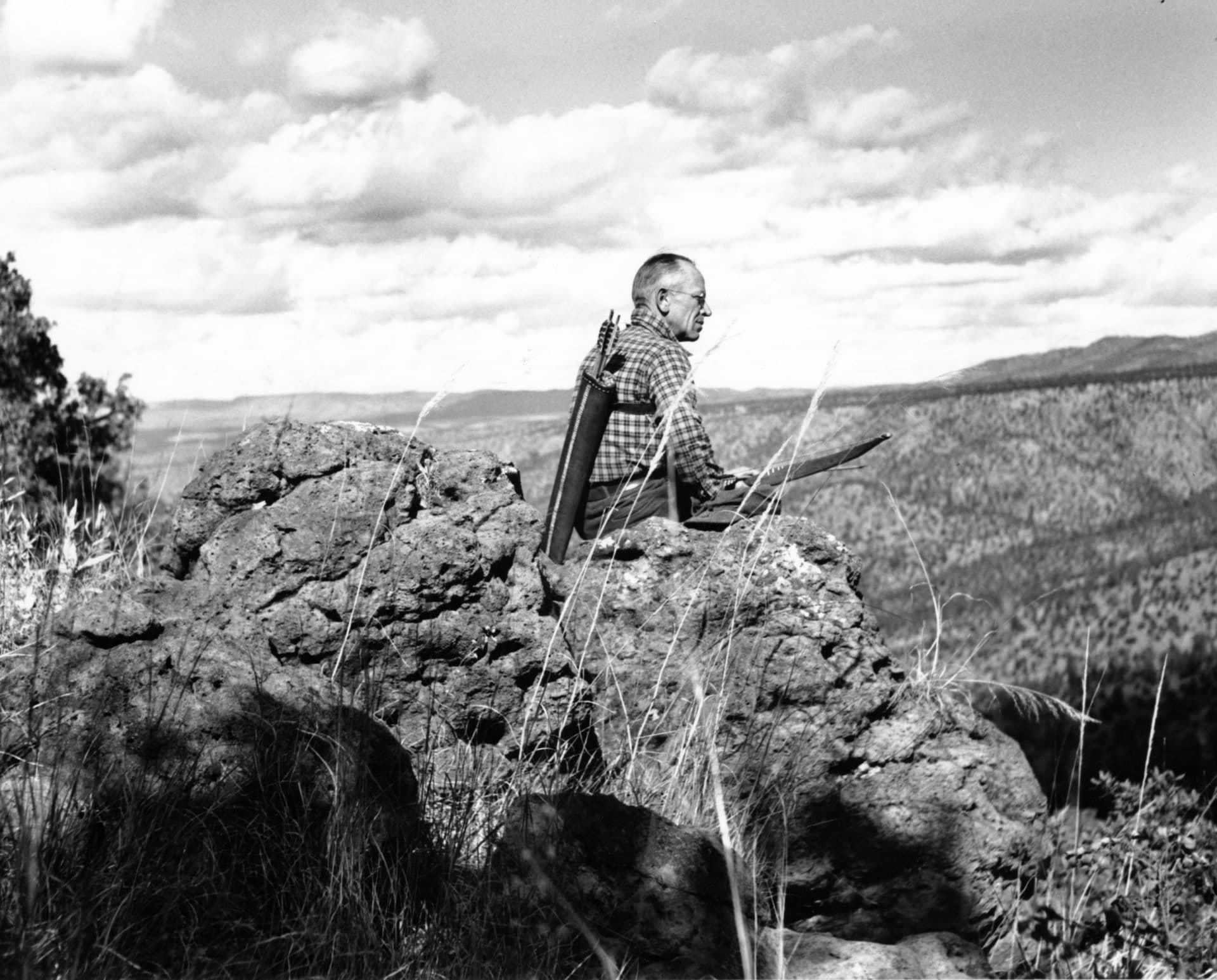
I live in a place with old mountains. My house is at the edge of their beginning. South and east of here, all is flat, a long delta running to the Mississippi River. But north and west, the hills begin, buckled shell rising from an ancient sea, quarts veins pulsing through the rock where the magma cooled. At one time, I’m told, the mountains towered high, pitched and peaked. But now they are rounded and gently sloped, smoothed by millennia of rain and roots and wind, lichen feeding from the surface.
As worn as these mountains are, they still have their vistas. I can run from my house, a slow climb north, and find myself a mile later looking out for miles at the city beneath me. Mountains have always been places from which to see farther. Life on the flat ground never gives the full view of things, but from a mountain, everything becomes clear and exposed, and space is revealed for what it is. What can seem distant over land, comes closer from a mountain view.
The mountains, too, see; they witness and judge. In the book of Micah, God thinks the mountains are reliable enough to hear the case of God against Israel. “Hear, you mountains, the controversy of the LORD.” It is possible, even, that it is the mountain that proclaims the famous call of that book toward the ways of God: “He has told you, o mortal, what is good; and what does the LORD require of you, but to do justice, and to love kindness, and to walk humbly with your God.”
Mountains see and they hear, they consider the world from the perspective of millennia. They judge with the long view in mind, not according to the passing whims of a culture, the century bound concerns of human life.
Aldo Leopold discovered this truth when he shot a wolf on a mountain in Arizona. He was a young man then, caught in the misunderstandings of his age. To kill a wolf was to do good for deer, he thought, and he was a game manager, so doing good for deer was his work. But as he recounts in his essay, “Thinking Like a Mountain,” he learned that the mountain saw things differently, the mountain knew better. “Only the mountain has lived long enough to listen objectively to the howl of the wolf,” he wrote.
It is the mountain that sees the larger picture, that can understand the whole context that is hidden from the view of those who have only the small view of their place and time. The task for us is to learn to listen to the mountain, to learn to see and think according to its perspective. When a cattle rancher fears a wolf, Leopold says that “He has not learned to think like a mountain. Hence we have dustbowls, and rivers washing the future into the seas.” The mountain knows that the wolves keep stocking rates in check, it knows that too many deer mean a loss of the shrubs and grasses that hold the soil in place. The mountain realizes in a way that the rancher does not that when the beavers begin to wander too far from the river, they will take down too many trees and will make the flow of erosion worse. The mountain knows that wolves have their place, essential to the whole.
For Leopold the human way is to “strive for safety, prosperity, comfort, long life, and dullness.” And while finding these things in limited measure is “all well enough…too much safety seems to yield only danger in the long run.”
“In wilderness is the salvation of the world,” wrote Thoreau. Leopold quotes these lines of mountain learned wisdom. The mountains know that real life lies beyond safety, beyond even death. You must lose your life to save it.
When Jesus climbed the wild mountain, a rocky place in the south of Syria, he did so as one who knows the way of life beyond comfort. Safety is not a Christian virtue, and it was not lived or taught by Jesus. The abundance of life Jesus reveled in, the one whose path he opened up for all who would climb the mountain after him and listen, comes not through domestication and control. It arrives from the Great Economy of Life, the Kingdom of God that includes ravens and young lions and Arizona wolves.
It would have made sense from the measures of a good marketing campaign, for Jesus to preach this sermon, perhaps the most important of his short ministry, in a city center or a synagogue. But such a sermon would have made no sense in such domestic and domesticated places. It is an outdoor sermon, a wild word where that catches and echos the mountain’s thinking.
It is in this sermon that we find birds and flowers, economies turned on their heads, idols unmasked, enemies loved and pieties mocked. It is a sermon on and of the mountain, wild words that teach a way beyond the usual judgement of good and evil, the moral standards of a people bent toward mammon. It is a sermon that knows the value of a wolf to a mountain; of the wild for a flourishing human life.
We too often try to keep the Sermon away from the mountain, bound in little books, read allowed in marble churches made of mountains lost. But “only the mountain has lived long enough to listen.” If we want to listen to this sermon, to hear its truth beyond comfort and safety, then we will have to learn to listen with the mountain, and find the happiness it hears in a howl.
Excellent… the Celtic way !
Thank you for starting to open this wisdom for us - that we may be better able to hear. 🌿